All Docs Reader - View & Edit
- 4.4
- Rating
- 100.00K
- Installs
- Free
- Price
 Analysis by App-foxy
When I first opened All Docs Reader - View & Edit, I approached it as a practical tool rather than a replacement for every office application on my phone. Its purpose is straightforward: bring common document types into one place so I can read, make changes, and manage files without jumping between separate viewers. That sounds simple, but document apps often become frustrating at the exact moment I need them most—when a file will not appear, opens in the wrong way, or seems editable until I try to change something.
This app is made by Fancy Mobile Apps and sits in the tools category. It is free to install, with optional in-app purchases ranging from $2.99 to $89.99 per item. The age rating is Everyone, and the current release is version 1.6.1 for devices running Android 8.1 or later. Those details make it accessible to a wide range of Android users, although the optional purchases are worth keeping in mind before treating it as a complete office suite.
Getting past the first points of friction
I find that the first snags with a document reader often come from the path a file takes before it reaches the screen, rather than from reading itself. In this section, I’d focus on a calm way to identify whether the trouble is a missing download, a confusing copy, or a document that needs a more specialized tool. That distinction matters because each calls for a different next step.
You May Also Like

 Pandora - Music & Podcasts
Pandora’s Music Is Easy to Start, but Harder to Recover
Pandora’s strength is its low-effort path from a seed to a station. Its weak spot is how much confidence it asks you to place in connection, setup, and quiet recovery.

 8 Ball Pool
 Is Built on Rivalries, Rematches, and Routine
A close look at the rivalries, rematches, shared routines, and unanswered safety questions that turn a quick pool match into a persistent mobile community.

 Samsung Music
’s Quiet Strength Is Playing What You Already Own
Its reach comes less from spectacle than from dependable access to a personal library. That simplicity is both the app’s strongest retention engine and its ceiling.

 AccuWeather: Weather Radar
AccuWeather Review: A Quick, Clear Forecast for Everyday Decisions
For everyday plans, the best forecast is the one you can understand quickly. AccuWeather makes rain timing, radar, and local conditions easy to act on, with a few trade-offs.

 Hill Climb Racing
Why Hill Climb Racing Still Turns Crashes Into One More Run
A tiny car, a bumpy hill and one more upgrade: Hill Climb Racing keeps resurfacing because its simple chaos makes every near-miss feel personal.

 AliExpress - Shopping App
AliExpress Makes Global Shopping Feel Personal, but Shoppers Bear the Risk
AliExpress turns a global marketplace into a pocket-sized discovery engine. Its reach is useful, its shopping loop compelling, and its trade-offs easy to miss.
More From Our News Desk
View All News


Why a document may seem to be missing
The most common early problem with an all-in-one document app is not necessarily the app itself. Files can be stored in a download folder, attached to an email, saved inside a messaging app, or placed in a cloud location that is not immediately visible to a local file browser. If a document does not appear after installation, I would first check where the file was actually saved rather than repeatedly refreshing the app.
A useful habit is to give files clear names before opening them in the reader. A phone may contain several versions of the same spreadsheet or presentation, and a vague name makes it easy to edit the wrong copy. I also recommend opening a known, ordinary document first. That separates a general setup issue from a problem limited to one file.
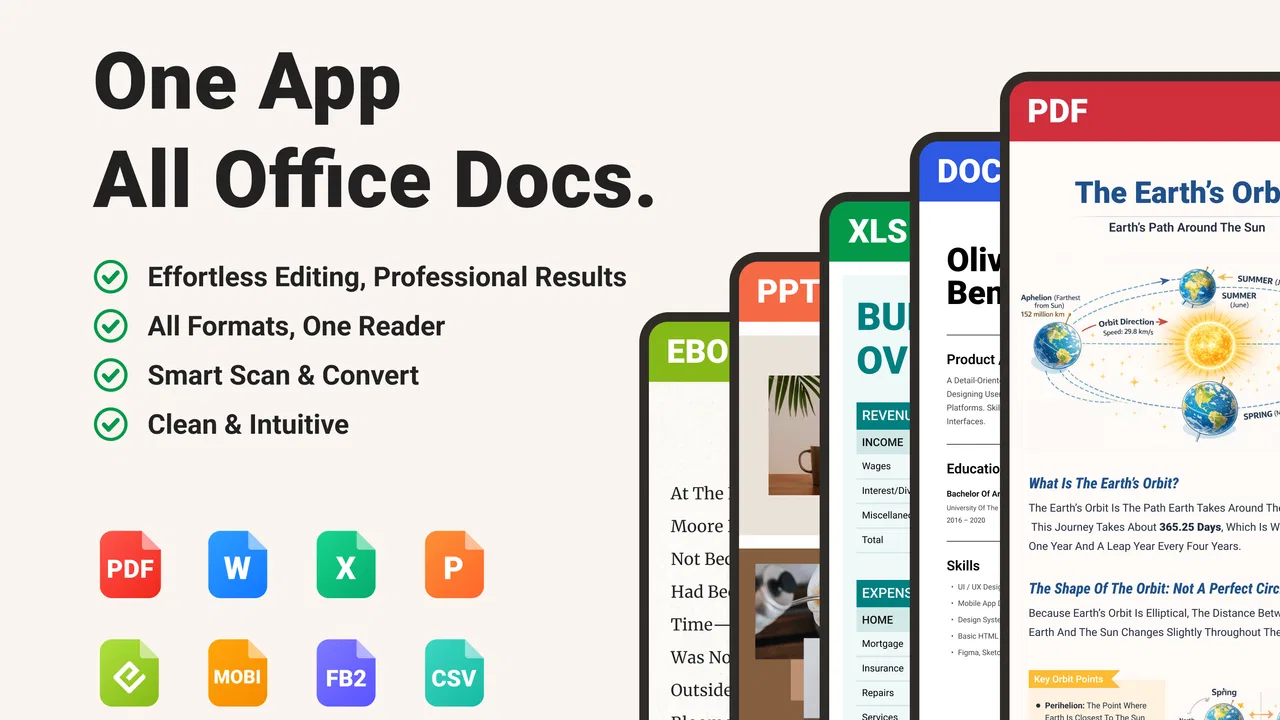
The app is intended to handle PDF, Word, Excel, Slides, TXT, and other document formats. That broad coverage is convenient, but file types are not all equally simple. A text document is usually less demanding than a spreadsheet with complex formulas, or a presentation with unusual fonts and embedded elements. I would judge the app by how it handles the files I actually use, not by assuming that every format behaves identically.
Simple checks before blaming the reader
Before troubleshooting, I check four basics: whether the file finished downloading, whether it opens elsewhere, whether the phone has enough free storage for a working copy, and whether the document is damaged. These checks take less time than reinstalling an app, and they often identify the real cause.
If a file came from a browser or an email, I download it again rather than relying on a partial copy. If it came from a computer, I compare the file size or transfer it once more. A document that fails in several readers is probably not an All Docs Reader problem. Conversely, if other files open normally in the app, the individual file deserves closer attention.
It also helps to keep the application updated when a newer version is available. Version 1.6.1 is the current version associated with this review, so users on older builds should not assume that a behavior seen previously still applies. After an update, I would close and reopen the app before testing a troublesome document, especially if the issue appeared immediately after installation.
What to expect from an all-in-one approach
The strongest idea here is consolidation. Instead of keeping one app for PDFs, another for word-processing files, and yet another for spreadsheets, I can begin with one document hub. That reduces the small but repeated annoyance of deciding which application should open a file. It is particularly useful for people who mostly read documents, make modest corrections, and need to locate files quickly.
There is a trade-off, though. A dedicated office application may offer deeper editing controls for a specific format. A specialized PDF tool can be better for advanced annotations, while a full spreadsheet suite is usually the safer choice for complicated formulas and intensive data work. I see this app as a practical generalist: helpful for everyday document handling, less convincing as the only tool for professional production work.
A realistic everyday workflow
Imagine receiving a meeting document while travelling. I would download it, open it in the reader, scan the pages, make a small correction if the file supports the required editing action, and keep the revised copy clearly named. Later, I would move that copy to the location where the rest of the project is stored. The value is not one spectacular feature; it is avoiding several app switches during a short task.
For that workflow, I recommend using a naming pattern such as “project-date-version” and preserving the original before editing. This is especially important on a phone, where a quick tap can make it unclear which copy is the untouched source. The app can help manage documents, but it cannot replace a sensible file routine.
Recovering a workflow when something goes wrong
When a file stalls or an edit is hard to verify, I prefer to protect the original and narrow down the cause before trying more changes. This section looks at practical recovery habits that keep a small phone task from turning into lost work, including when it makes sense to switch to the app that created the document.
When opening fails halfway through
If a document opens slowly or stops loading, I start with the least disruptive recovery step: close the file, return to the document list, and try again. If that fails, I reopen the source location and create a fresh local copy. This is safer than making repeated edits to a file that may not have loaded correctly.
For a file received through another app, I also try opening the attachment from its original conversation or download screen instead of relying on a recently used entry. The goal is to confirm that the reader is receiving a complete file. If the same document repeatedly fails while simpler files work, I would test it in the application that created it. That comparison can reveal unsupported content, corruption, or a format-specific limitation.
Protecting edits on a phone
Editing on a small screen creates a different kind of risk: the change may be correct, but the saved copy may be difficult to identify. I prefer to save a new version before making substantial changes, then reopen that version to confirm that the result is usable. This is a more reliable check than trusting a brief confirmation message.
For spreadsheets, I would be especially careful with formulas, cell references, and layout. A quick visual inspection may not reveal a changed calculation. For presentations, I would review slides after editing because text can shift when the original design depends on fonts or layout elements that are not reproduced exactly on the phone. For PDFs, I would check that the page still displays as expected after any change.
The safest mobile workflow is original file first, working copy second, final check last. That advice is not glamorous, but it prevents the most expensive mistake: losing the clean source while trying to make a quick adjustment.
When the file list becomes confusing
A document manager is only useful if I can identify the right file quickly. I avoid keeping several unnamed downloads in the same folder, and I remove obvious duplicates after confirming that they are no longer needed. If the app shows a broad collection of documents, sorting the surrounding storage structure matters as much as the reader itself.
One non-obvious advantage of this approach is that it makes troubleshooting easier. If every project file follows the same naming pattern, I can tell whether the problem affects one damaged copy or an entire group of documents. It also reduces the chance of sending an outdated version after editing.
Knowing when another app is the better recovery tool
If I need advanced spreadsheet analysis, extensive document collaboration, or highly precise PDF work, I would move the task to a dedicated application. That is not a failure of this reader; it is the normal compromise of choosing one tool for several formats. All Docs Reader is more appealing when the priority is access and basic management across different document types.
The free entry point makes it reasonable to test with personal, non-critical files first. I would not begin with the only copy of an important contract or a complex financial workbook. Once the app proves reliable with the formats and workflows I use, it can become a convenient part of my routine. Optional purchases may change what is available in the app, so I would review any purchase prompt carefully instead of assuming that every editing action belongs to the free experience.
When the app is not the cause
Some problems are caused by the phone, the file source, or the document itself. A device with very little free storage may struggle to download or create working copies. An interrupted connection can leave an incomplete attachment. A document created with unusual software may contain elements that a general reader handles differently from the original program. These are important distinctions because reinstalling the reader will not repair a damaged file or restore a missing download.
I also pay attention to whether the issue follows the file or the device. If the same document fails on multiple devices, I investigate the file. If many unrelated documents fail on one phone but work elsewhere, I investigate the phone, its storage, or the installation. This simple comparison prevents random troubleshooting and gives a clearer path to a solution.
For privacy-sensitive documents, I would also think carefully about where the file came from and where I save the edited copy. The app’s broad document role makes it tempting to place everything in one location, but separating personal, work, and temporary files is easier to manage. I would avoid editing an important document until I know which copy is the original and which one is intended for sharing.
Who will appreciate it most
I think the app suits students, home users, travellers, and anyone who regularly receives mixed document formats but does not want a separate viewer for each one. It is also useful for people who mainly read files and only occasionally need to make changes. The combination of PDF, Word, Excel, Slides, and TXT support gives it a broader daily role than a PDF-only reader.
It is less suitable for someone who spends hours building sophisticated spreadsheets, preparing polished presentations, or performing detailed PDF production. Those users should compare the editing depth they need with a dedicated office or document application. A general reader can save time for small tasks, but it should not be mistaken for a full desktop workflow.
My practical verdict
All Docs Reader - View & Edit is a sensible tool for bringing everyday documents together on an Android phone. I like the convenience of opening several familiar formats from one place, and the free installation lowers the barrier to trying it. Its rating is 4.4 from around 470 ratings, while the app has passed 100K+ installs, which suggests that it has found an audience among people looking for this kind of document utility.
My recommendation comes with a clear condition: use it as a convenient general-purpose reader and light editor, not as an automatic substitute for every specialized office tool. Start with ordinary files, keep original copies, verify saved edits, and test important formats before relying on it for critical work. Those habits address most of the friction that can otherwise make a document app feel unreliable.
For my own use, the strongest reason to choose it is not a single advanced function but the reduction of everyday switching. When I need to inspect a PDF, read a Word file, check a spreadsheet, or open a presentation on the go, having one familiar starting point is genuinely useful. If that matches your needs, this tools app is worth trying; if your work depends on deep format-specific editing, a dedicated alternative will probably serve you better.
FAQs for All Docs Reader - View & Edit
01What file formats can All Docs Reader handle?
All Docs Reader supports a wide range of file formats, ensuring versatility for users. It can open and edit documents such as PDF, DOC, DOCX, XLS, XLSX, PPT, and TXT files. This makes it an ideal tool for users who need a comprehensive solution to manage various document types without needing multiple apps.
02Is All Docs Reader available offline?
Yes, All Docs Reader offers offline capabilities. Users can view and edit documents without an active internet connection, which is particularly useful for those on the go or in areas with limited connectivity. However, some features like cloud syncing may require internet access to function properly.
03Does All Docs Reader include cloud storage integration?
All Docs Reader provides integration with popular cloud storage services such as Google Drive, Dropbox, and OneDrive. This allows users to easily access and manage their documents across different devices, ensuring that their files are always up to date and accessible from anywhere.
04Are there any security features in All Docs Reader?
All Docs Reader includes several security measures to protect user data. It offers password protection for sensitive documents and ensures encrypted storage for files. These features help safeguard your information, especially when working with confidential or private documents.
05Is All Docs Reader free to use, or does it require a subscription?
All Docs Reader offers a free version with basic features, which suits casual users. However, for those who require advanced functionalities like enhanced editing tools and cloud storage integration, a subscription may be necessary. The app provides different pricing tiers to cater to varying user needs.
Pros
- Supports multiple document formats.
- User-friendly and intuitive interface.
- Fast and smooth document loading.
- Integrated editing tools for quick changes.
- Offline access to saved documents.
Cons
- Limited advanced editing features.
- Occasional ads may disrupt usage.
- Requires frequent updates for new formats.
- Some features locked behind paywall.
- No cloud integration for file syncing.

All Docs Reader - View & Edit
Gallery